
Express Delivery Price Guide: What Makes Urgent Transport Expensive?
A practical guide to Express Delivery Price Guide: What Makes Urgent Transport Expensive?, with decision tables, operator checklists, free Remo&Co tools and source-backed notes where compliance matters.
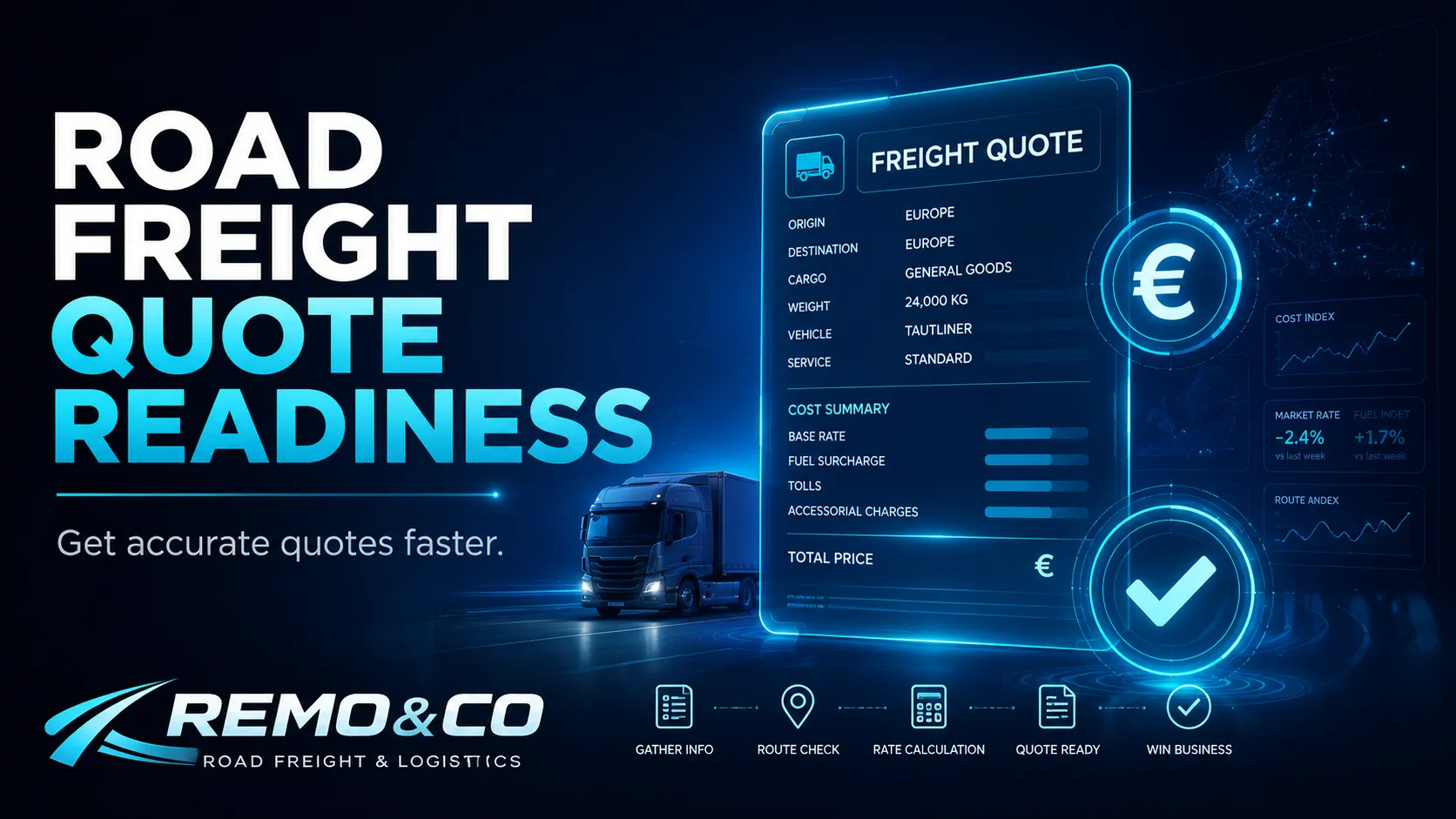
The practical answer
Express Delivery Price Guide: What Makes Urgent Transport Expensive? answers a practical freight question, not a theoretical one. The aim is to help a shipper, buyer or operations team make a better decision before the truck is booked.
A road freight price is not one number. It is a risk-adjusted combination of distance, vehicle type, tolls, fuel, waiting time, urgency, route balance, driver-hours feasibility and document requirements.
Primary SEO focus: road freight cost Europe. The operational focus is simple: turn a vague delivery request into a clear transport decision with fewer surprises.
Why this matters
Two quotes for the same lane may look different because the assumptions are different. One may include tolls, waiting-time risk and a dedicated vehicle; another may assume flexible loading, backhaul availability and lower service control.
In European road freight, the best answer is rarely “the cheapest carrier”. The better question is: what must be true for this delivery to succeed? That means checking time, cargo, access, documents, route risk and the level of control required.
Decision framework
| Situation | Best decision | Why it matters |
|---|---|---|
| Long distance with toll countries | Separate toll assumptions | Tolls can materially change the price |
| Urgent booking | Expect a premium | Urgency reduces vehicle options and backhaul opportunities |
| Unclear loading slot | Add waiting-time risk | Dock delays consume capacity and driver hours |
| Dedicated vehicle required | Compare total risk, not only price | Direct control costs more but reduces handovers |
| Recurring lane | Benchmark with lane history | Stable volume can improve planning and pricing |
Operator checklist
This checklist turns the article into an operational brief. Use it before asking for a quote or confirming a delivery slot.
- Exact addresses
- Vehicle type
- Ready time and deadline
- Toll countries
- Waiting-time policy
- Fuel or CO2 surcharge assumptions
Mistakes to avoid
- Comparing quotes without comparing assumptions
- Ignoring waiting-time risk
- Treating tolls and fuel as carrier margin
- Booking too late and expecting a stable price
How Remo&Co helps
Remo&Co combines own fleet capacity with trusted carrier partnerships, operators, drivers and data-minded workflows. For a shipper, that means the conversation can move beyond “price please” and into a clearer answer: vehicle fit, time feasibility, document readiness and risk.
Free tool: Express Delivery Feasibility Checker. Use the recommended tool, copy the result into your RFQ and send it to Remo&Co for operator review.
FAQ
What is the first thing to check?
Start with the constraint that cannot move: delivery deadline, cargo readiness, vehicle access, documents or budget. The best transport decision protects that constraint first.
When should I ask for a dedicated vehicle?
Use a dedicated vehicle when the shipment is urgent, palletized, high value, appointment-critical, fragile, or needs fewer handovers and faster POD.
Which free Remo&Co tool should I use?
Use the tool linked in this article. It turns the operational question into structured data that Remo&Co can validate faster.
Sources and further reading
Need a transport decision checked by an operator? Send the result to Remo&Co and get a confirmed transport option.

Related Posts
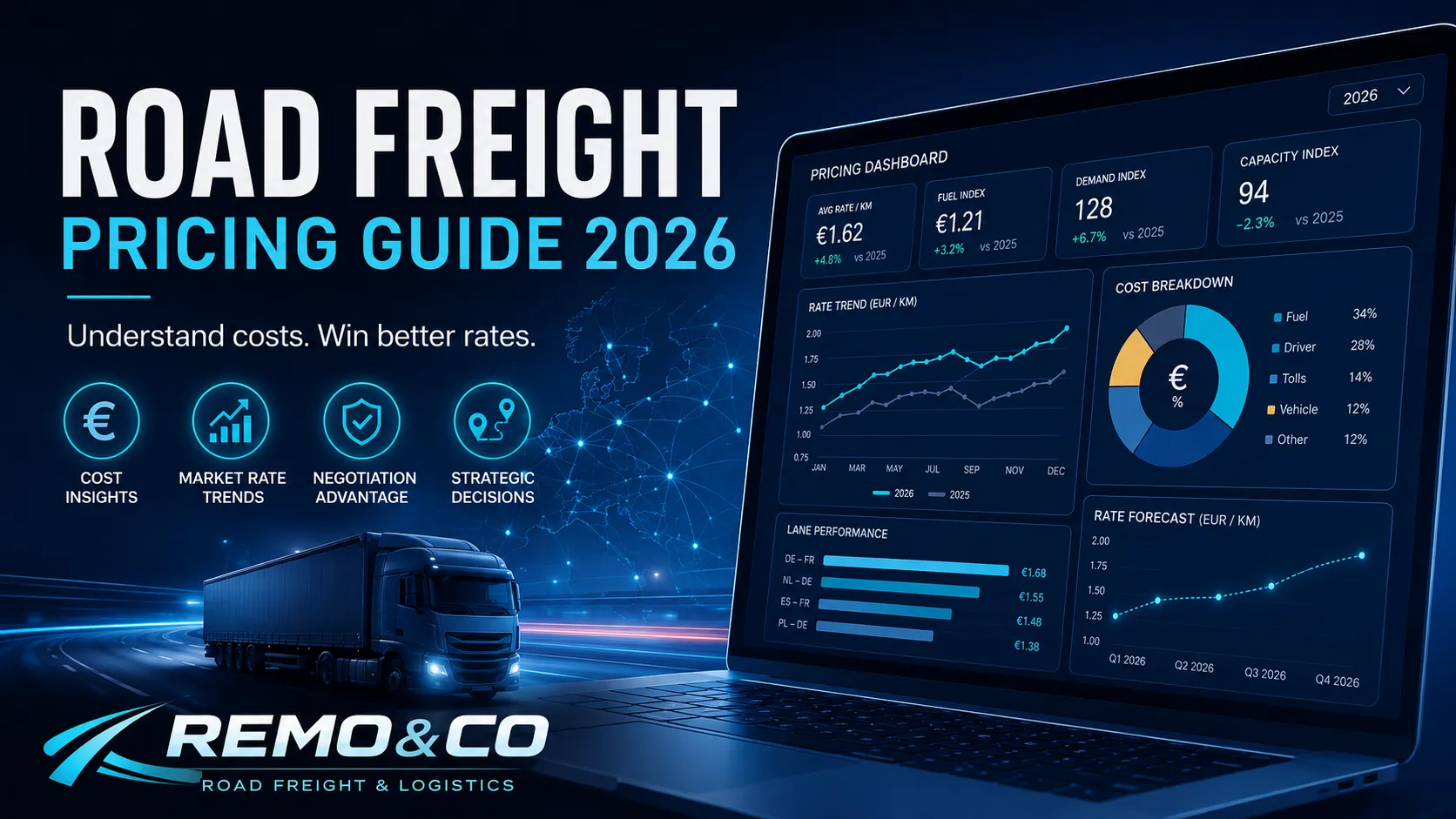 Freight pricing
How Much Does Road Freight Cost in Europe?
A practical guide to How Much Does Road Freight Cost in Europe?, with decision tables, operator checklists, free Remo&Co tools and source-backed notes where compliance matters.
Freight pricingRoad Freight Price per KM: What Really Affects Your Quote?
A practical guide to Road Freight Price per KM: What Really Affects Your Quote?, with decision tables, operator checklists, free Remo&Co tools and source-backed notes where compliance matters.
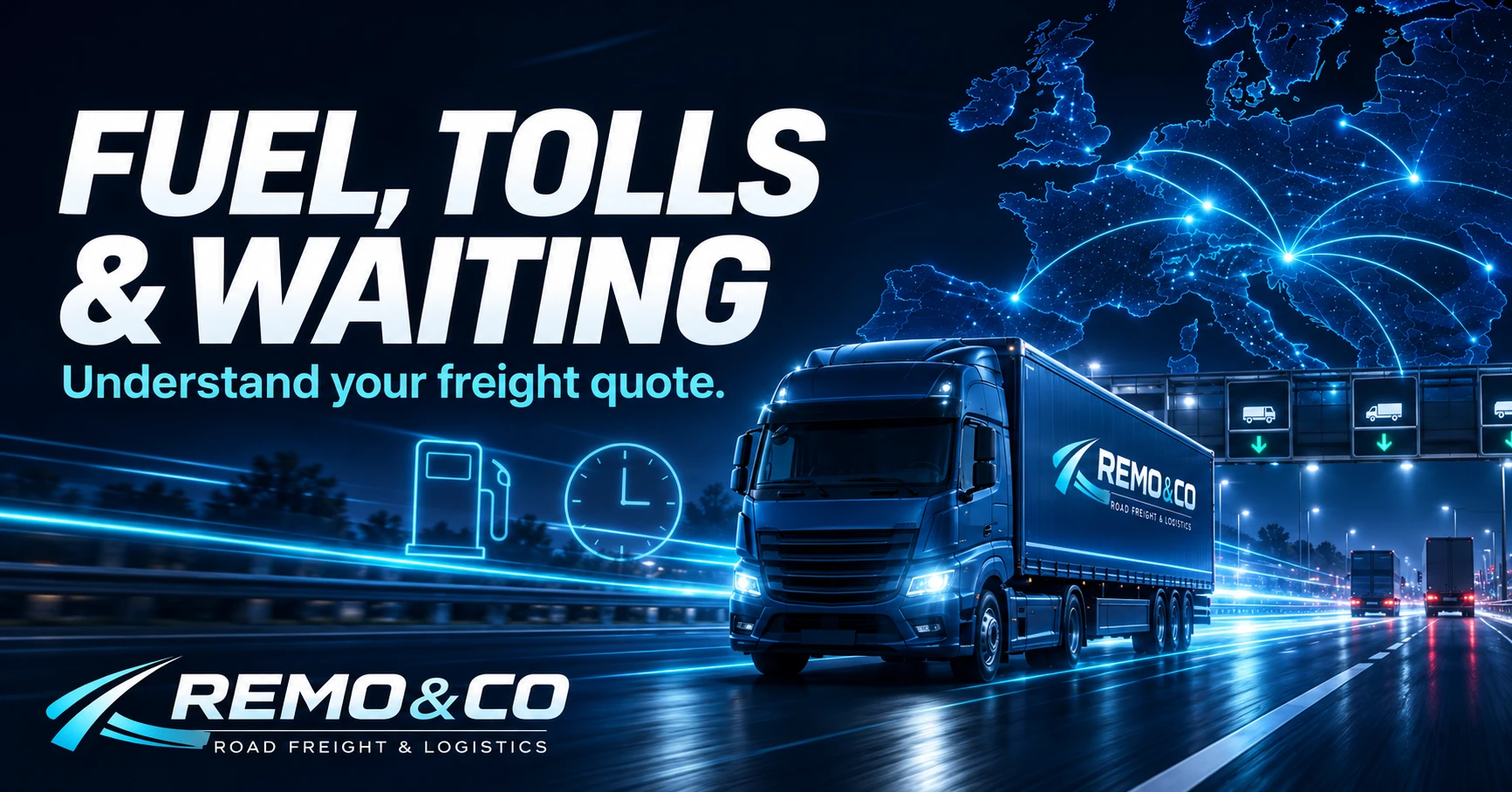 Freight pricing
Fuel, Tolls and Waiting Time: The Hidden Costs in Road Freight
Check fuel adjustments, tolls and waiting terms in freight quotes, including the Dutch toll changes and what they mean for the total.