
Tail-lift pallet delivery: what to confirm when there is no loading dock
No loading dock or forklift at the receiver? Check the packed unit, handling equipment, ground conditions and handover point before booking a tail-lift delivery.

No dock or forklift: is a tail-lift enough?
A tail-lift can make pallet delivery possible at a receiver without a loading dock. It does not, by itself, confirm that the goods can be moved to the intended handover point. Before booking, the carrier needs to accept both the packed load and the receiving arrangement, including suitable handling equipment and a trained operator.
Start with the receiver's actual facilities. A forklift available somewhere on the site is not necessarily available for your appointment. Confirm who will receive the goods and what equipment will be present.
Describe each packed unit, not just the shipment total
Provide the gross weight of each pallet including its packaging and support, plus its packed length, width and height. Mention overhang, fragile packaging, non-stackability and any unevenly distributed load. Ask the supplier for a packing drawing if the weight is concentrated away from the centre; do not guess the load centre.
Vehicle payload, platform dimensions and lifting capacity are different checks. The carrier must assess the actual equipment, its load chart and load position. A capacity number on a brochure is not acceptance of your pallet.
Which receiving situation are you booking?
| Receiver's situation | What needs confirmation | Booking decision |
|---|---|---|
| No dock or forklift; hard, level receiving area | Access, packed units, tail-lift and suitable onward handling | Request an assessed tail-lift option. |
| Forklift available by appointment | Availability, suitability, operator and agreed unloading method | Describe that arrangement rather than assuming a tail-lift is required. |
| Gravel, slope, kerb or threshold on the proposed path | Photos, dimensions and a feasible alternative handover point or method | Resolve the constraint before confirming transport. |
| Goods must enter a shop or workshop | Distance, doors, thresholds, equipment, people and service scope | Request that movement explicitly. |
The receiving checklist to send with the enquiry
- Goods: pallet count, individual gross weights, packed dimensions, packaging condition and handling restrictions.
- Approach: site address, entrance, access width and height, vehicle restrictions and space available.
- Ground: hard, level surface at the proposed unloading point; disclose slopes, loose material, drains or damage along the path.
- Handover: exact location, distance from the vehicle, obstacles and whether movement indoors is requested.
- People and equipment: receiver contact, appointment, available equipment and who is responsible for each agreed movement.
Current photos of the entrance and receiving area help explain the site. They support the carrier's assessment; they do not replace it.
Worked example: two pallets to a workshop
Illustrative enquiry, not an accepted transport plan: two non-stackable pallets, each 120 × 80 × 150 cm and 420 kg gross; shipment total 840 kg. Collection is from a loading dock. The workshop has neither a dock nor a forklift and requests a 09:00–11:00 delivery appointment.
The receiver reports a concrete yard and proposes a marked outdoor receiving area beside the entrance. It supplies photos, measured access dimensions and the distance from the stopping point. Its receiving contact will attend. Moving the pallets inside is not requested.
The remaining confirmation is specific: can the proposed vehicle, tail-lift and handling equipment serve these units and this location, with the required trained operator? Equipment acceptance, appointment availability and price remain pending until the carrier confirms them.
Define where the delivery ends
“Tail-lift delivery” does not automatically mean placement inside the building. Put the agreed handover point and included movement in the offer. If the receiver changes it to an area beyond a slope or threshold, or the supplier changes a pallet's weight, reconfirm the method, price and appointment before dispatch.
Turn the brief into a quotation request
Use the freight enquiry generator to collect the details, then request a quote from Remo&Co. Identify the lack of a dock or forklift in your request.
The vehicle selector and pallet-capacity guide help describe the load; neither approves lifting equipment. For a building site, also use the construction-site delivery checklist.
Questions before booking a tail-lift delivery
Can I receive a pallet without a forklift or loading dock?
Possibly, if the carrier accepts the load and site with suitable equipment. State both absences when requesting the quote. A tail-lift covers a height difference; movement to the handover point still needs an agreed arrangement.
What is the maximum pallet weight for a tail-lift delivery?
There is no universal limit for every delivery. Give each packed unit's gross weight and dimensions. The equipment's load chart, load position, handling arrangement and site conditions determine whether the carrier can accept it.
Can the receiving path cross gravel or a slope?
Do not assume a pallet truck can use that path. Describe the surface and gradient, with photos, before booking. The carrier must assess the arrangement; a different handover point or handling method may be needed.
Does tail-lift delivery include taking pallets inside?
Only if that service has been agreed. Specify the final location, distance, doors and thresholds. Ask the offer to state the included movement, equipment and responsibilities instead of relying on the word “delivery”.
What if the receiver changes the unloading arrangement?
Send the new details before dispatch and obtain reconfirmation. A changed entrance, surface, time or handover point can affect equipment suitability, staffing, price and the delivery appointment.
Sources and scope
RHA tail-lift and pallet-truck Q&A discusses site-specific assessment rather than one safe pallet weight. The Dhollandia manual, USE-V01-EN-2009 explains load-chart and load-centre principles. These references do not replace the instructions and assessment for the equipment actually supplied.

Related Posts
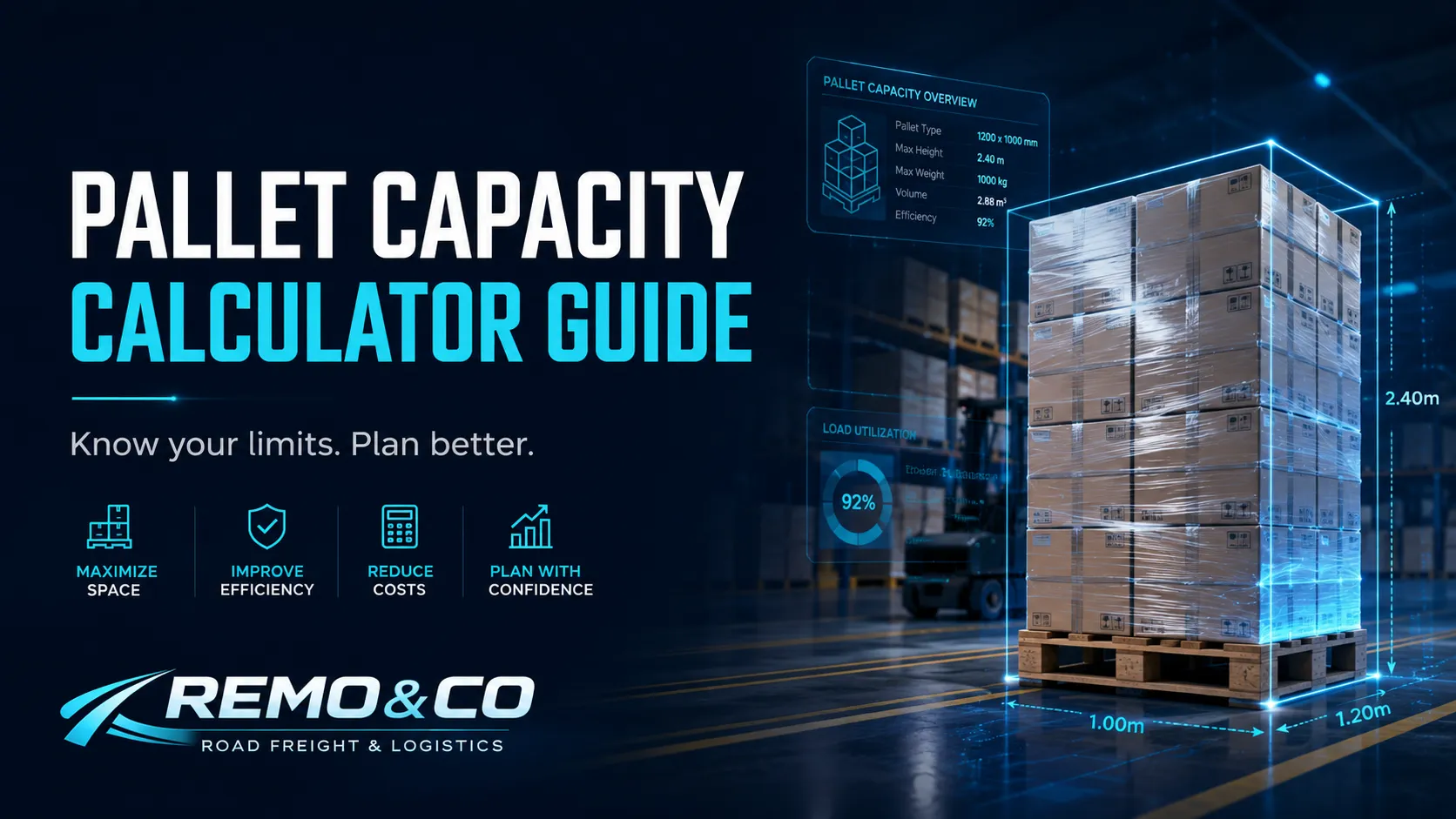
How many pallets fit in a truck? Non-stackable loads and loading metres
Calculate pallet floor space, compare loading metres with complete rows, and prepare packed dimensions, weight and stacking limits for a vehicle check.
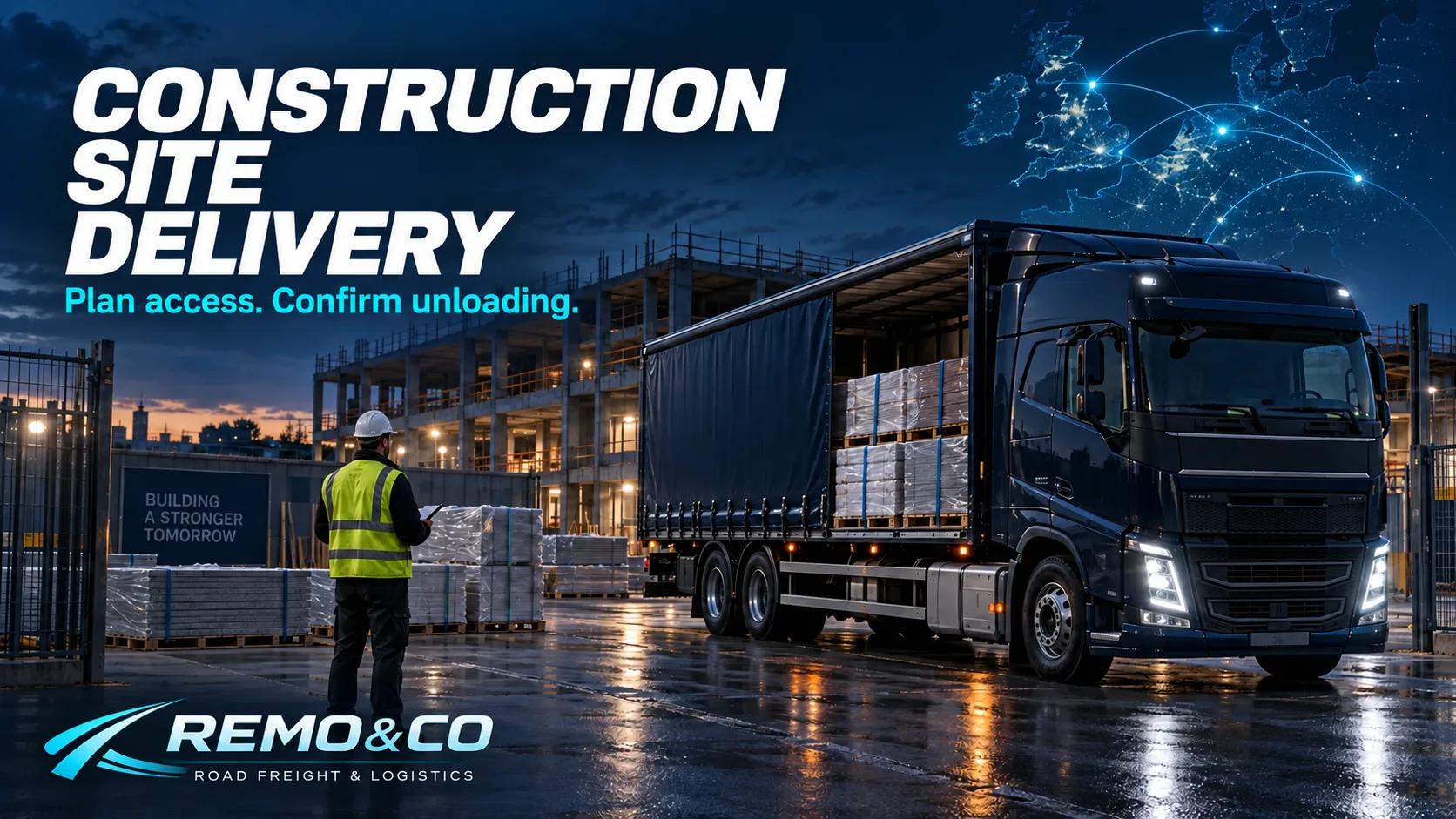
Pallet delivery to a construction site: confirm access, time slot and unloading
Confirm the truck entrance, packed pallet data, receiving team and unloading method before booking a delivery of building materials to a construction site.

Van, Porteur or Semi-Trailer: Which Camion Livraison Do You Need?
A practical guide to Van, Porteur or Semi-Trailer: Which Camion Livraison Do You Need?, with decision tables, operator checklists, free Remo&Co tools and source-backed notes where compliance matters.