
Netherlands truck toll in 2026: what a freight quote should clarify
The Dutch distance-based truck toll is in force. Learn what the temporary reduction means and which questions help you compare transport offers.
Preparing a shipment to the Netherlands, or a route that passes through the country? Since 1 July 2026, qualifying heavy goods vehicles have been subject to a distance-based toll on the designated Dutch road network. When comparing freight quotations, the useful question is what each offer includes for the proposed vehicle, route and transport date. A headline price alone does not answer that question.
What changed on 1 July 2026
The Dutch government confirmed the scheme's launch on 1 July 2026. Qualifying Dutch and foreign trucks pay according to the distance travelled on roads covered by the scheme. In the Netherlands, the toll replaces the Eurovignette. This does not mean that the Eurovignette has disappeared from every other country.
The official scope guidance covers category N2 and N3 vehicles with a technically permissible maximum mass above 3,500 kg. The network includes almost all motorways and certain provincial and municipal roads. The weight of your pallets alone therefore does not determine whether the truck is subject to the toll. Shipment data and the vehicle's regulatory classification serve different purposes.
Exemptions and dispensations exist. Eligibility depends on the vehicle and its circumstances, and foreign registration may involve specific procedures. Ask the carrier to check the applicable case. A small load or a short journey is not evidence of an exemption.
September to December: a toll reduction, not a discount on the whole bill
The decision published on 27 May 2026 provides for a temporary 22.3% reduction in toll rates from 1 September to 31 December 2026. At this review date, 9 September 2026, that period has already begun.
You cannot automatically deduct 22.3% from a freight quotation. The transport price also covers the vehicle, driver, fuel, positioning and agreed services. The effect on your offer depends on its scope and commercial conditions. Ask how the offer treats the toll component instead of applying the percentage to the total yourself.
The official rate guidance distinguishes between periods and vehicle or combination characteristics, including the relevant technical maximum mass and CO₂ and Euro classes. Use the table for the planned transport date. There is no single per-kilometre rate representing every shipment. Information for 2027 marked as provisional must be checked again before use.
Six points to compare in your quotations
Use the following checklist to ask each provider the same commercial questions. It prepares a comparison; it does not calculate the toll.
- Route: give both addresses and ask whether the planned journey enters the Netherlands, including in transit. Make sure providers are working from the same collection and delivery points.
- Date: state when the goods will be ready and the receiving window. Treat an offer for September and a budget for January 2027 as different planning cases, rather than assuming the same conditions apply.
- Load: provide packaged dimensions, gross weight, stackability and handling requirements. These details help select a vehicle but do not replace its regulatory data.
- Included charges: ask whether tolls are included, shown separately or subject to an adjustment described in the offer. If the wording is unclear, request clarification before accepting.
- Other items: check fuel, waiting time, additional stops and special access conditions separately. A clear toll line does not by itself explain these other parts of the quotation.
- Changes: establish who reconfirms the price if the vehicle, route or date changes after quotation. Keep that answer with the offer so that your team works from the same assumptions.
Compare two offers with different toll terms
Imagine two offers for the same pallets and addresses. The first says “tolls included”. The second gives a transport price and says road charges are still to be confirmed. You do not yet have two comparable totals. Ask for the second offer's full scope and adjustment conditions before choosing. This is an illustrative example, not an actual quotation or a description of Remo&Co's pricing policy.
A simple comparison sheet can leave three spaces for each offer: included items, items awaiting confirmation and conditions that could change the price. An empty answer is a question to resolve, not a zero-cost item. This keeps the discussion focused on comparable information without inventing a surcharge or an expected saving.
For more preparation, see our guide to fuel, tolls and waiting time. To compare transport options, our road freight services page distinguishes shared capacity from a dedicated vehicle.
Prepare your transport request
Send the addresses, date, dimensions, weight and access restrictions. Add an explicit question about tolls and how long the proposed price remains valid. If a detail is still uncertain, flag it rather than presenting it as confirmed. Remo&Co can assess your request according to the route and availability; this article guarantees neither capacity on a particular lane nor a specific saving.
Describe your shipment to request a quote.
Verification date and next review
Official sources checked on 9 September 2026. The July launch and September reduction period are separate events; the reduction decision was published in May. Recheck the rates when booking and before any transport planned from 1 January 2027. This page needs review if the authorities change the dates, scope or rates.

Related Posts
 Freight pricing
Fuel, Tolls and Waiting Time: The Hidden Costs in Road Freight
Check fuel adjustments, tolls and waiting terms in freight quotes, including the Dutch toll changes and what they mean for the total.
 Freight pricing
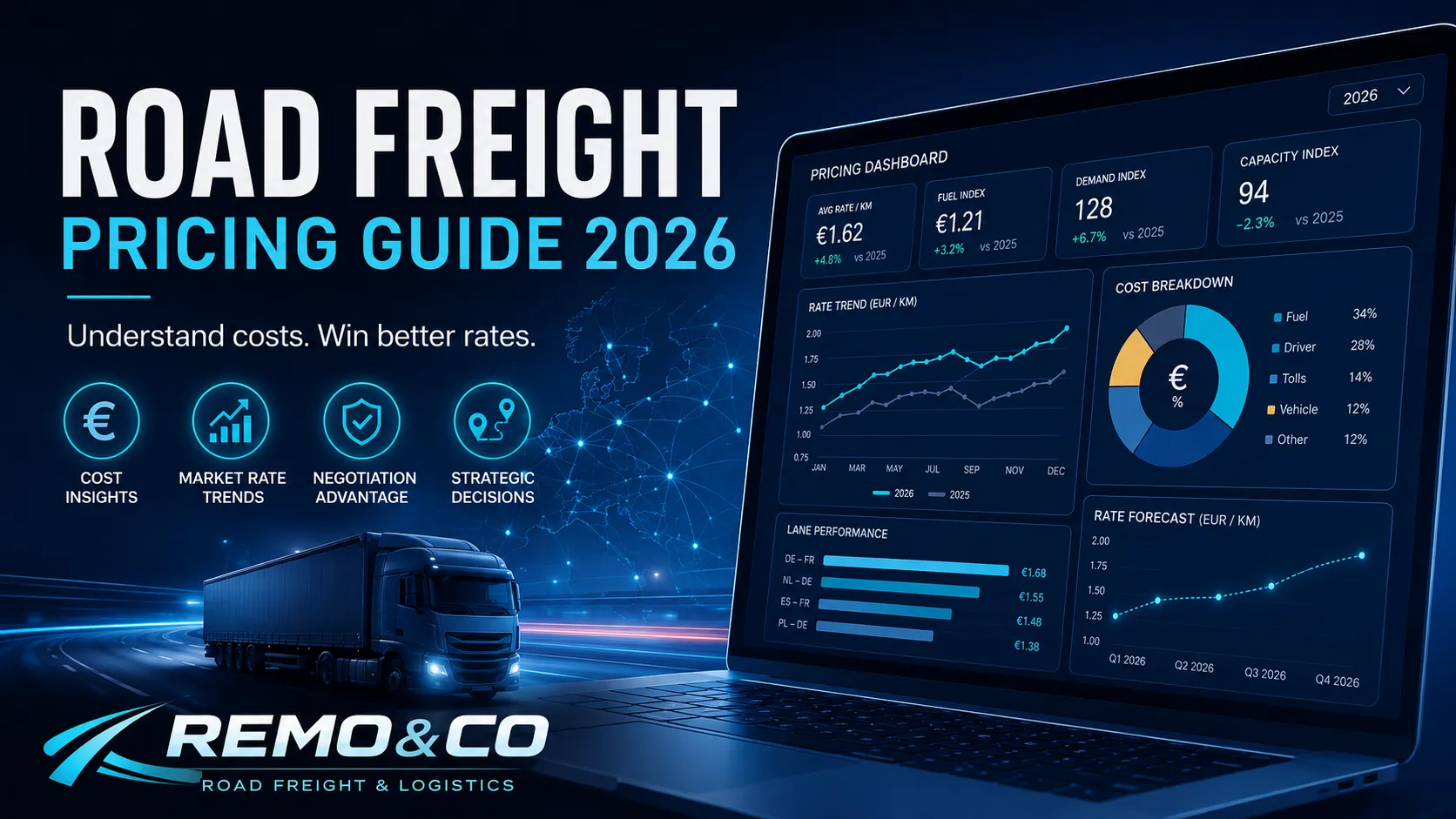
Road Freight Price per KM: What Really Affects Your Quote?
A practical guide to Road Freight Price per KM: What Really Affects Your Quote?, with decision tables, operator checklists, free Remo&Co tools and source-backed notes where compliance matters.
Freight pricingHow Much Does Road Freight Cost in Europe?
A practical guide to How Much Does Road Freight Cost in Europe?, with decision tables, operator checklists, free Remo&Co tools and source-backed notes where compliance matters.