
Intra-EU road freight: documents, exceptions and shipment planning
Prepare a B2B shipment within the EU: check goods status, customs exceptions, transport documents and the details needed for comparable quotations.
Start with the goods and the actual route
For ordinary B2B goods with Union status, movement within the EU customs territory normally involves no new import clearance at each internal border. Imported goods can acquire that status through release for free circulation. European Commission: free circulation.
Start with three questions: what are the goods, what is their customs status, and where will the vehicle actually travel? A France–Germany shipment and a journey between EU addresses that passes through Switzerland need different preparation. The country names on the order alone do not settle the procedure.
When the usual intra-EU assumptions change
- Goods not released for free circulation: an applicable customs procedure must be agreed. T1 is not a compulsory form for all intra-EU freight.
- Travel outside the customs territory: transit or proof-of-status arrangements may be relevant. T2 is a transit procedure indicator, not the name of Union status. Commission: customs transit.
- Special territories: customs, VAT and excise boundaries differ; check the precise destination. Commission: territorial scope.
- Alcohol, tobacco and other excise products: dedicated movement procedures apply. Commission: excise movements.
- Regulated goods: product-specific rules can apply inside the single market. Your Europe: selling goods. Declare the exact goods and required handling before requesting acceptance.
Prepare one consistent shipment file
For carriage within its scope, the CMR consignment note records the transport contract. Its absence does not itself invalidate that contract. CMR, Articles 1 and 4.
Agree who prepares the transport document, who checks it at loading and who retains the signed delivery record. Match package references, quantities and addresses across the order, delivery note, packing information and invoice where applicable. These are practical file checks, not a claim that every document is a universal border requirement.
EORI identifies parties in customs operations; crossing an internal EU border alone does not create that requirement. Commission: EORI. VAT on the goods sale and on the transport service must be assessed separately. Your Europe: cross-border VAT. Confirm invoicing treatment with the responsible accounting team.
Compare the service before comparing the price
- Collection and delivery: provide full addresses, site contacts, opening hours and booked slots.
- Load: give packed dimensions, gross weight, pallet count and stackability.
- Handling: identify docks, forklifts, tail-lift needs and access restrictions at both ends.
- Timing: distinguish the cargo-ready time from the required arrival window; ask how a change is reconfirmed.
- Offer: compare the same service, handling, tolls, waiting conditions and delivery evidence.
Ask whether transfers are planned and which updates will be supplied. A short distance does not establish a guaranteed arrival time. Do not infer specialist acceptance from a generic quotation form.
A practical example and the next step
Illustrative case: three non-stackable pallets of ordinary finished goods are ready at a Lyon warehouse for a German business. Before comparing offers, confirm Union status, routing, loading equipment and the consignee’s appointment. If routing changes through Switzerland, ask the responsible customs party to reassess the file before departure. This example is a preparation method, not a tariff or delivery promise.
Use the shipment-file guide to assemble the information, then compare dedicated, partial and full-load options. For a Great Britain destination, use the separate ELO, GMR and ENS checklist.

Related Posts
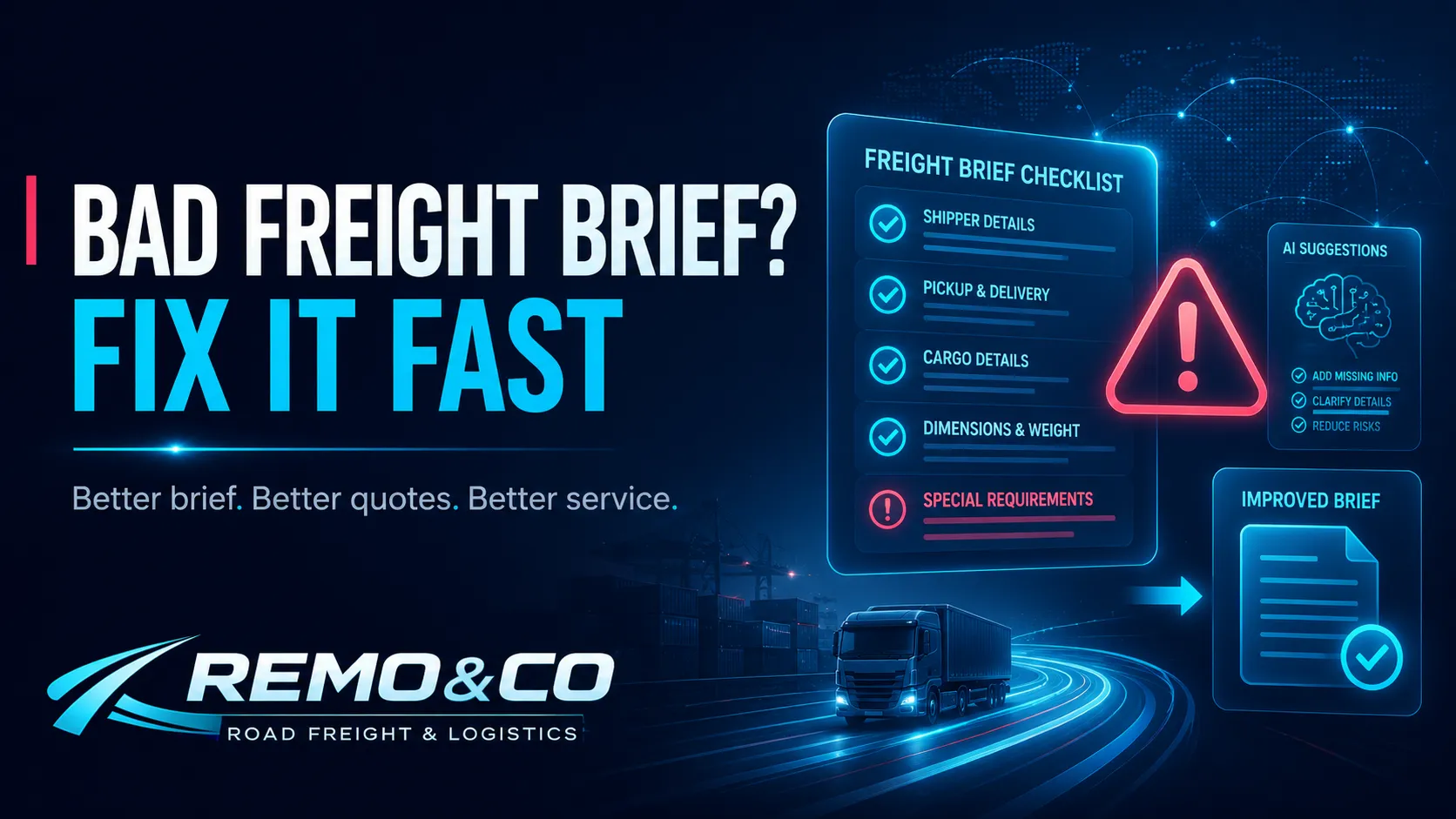 Documents & proof
How to Prepare a Road Freight Shipment File
A practical guide to How to Prepare a Road Freight Shipment File, with decision tables, operator checklists, free Remo&Co tools and source-backed notes where compliance matters.
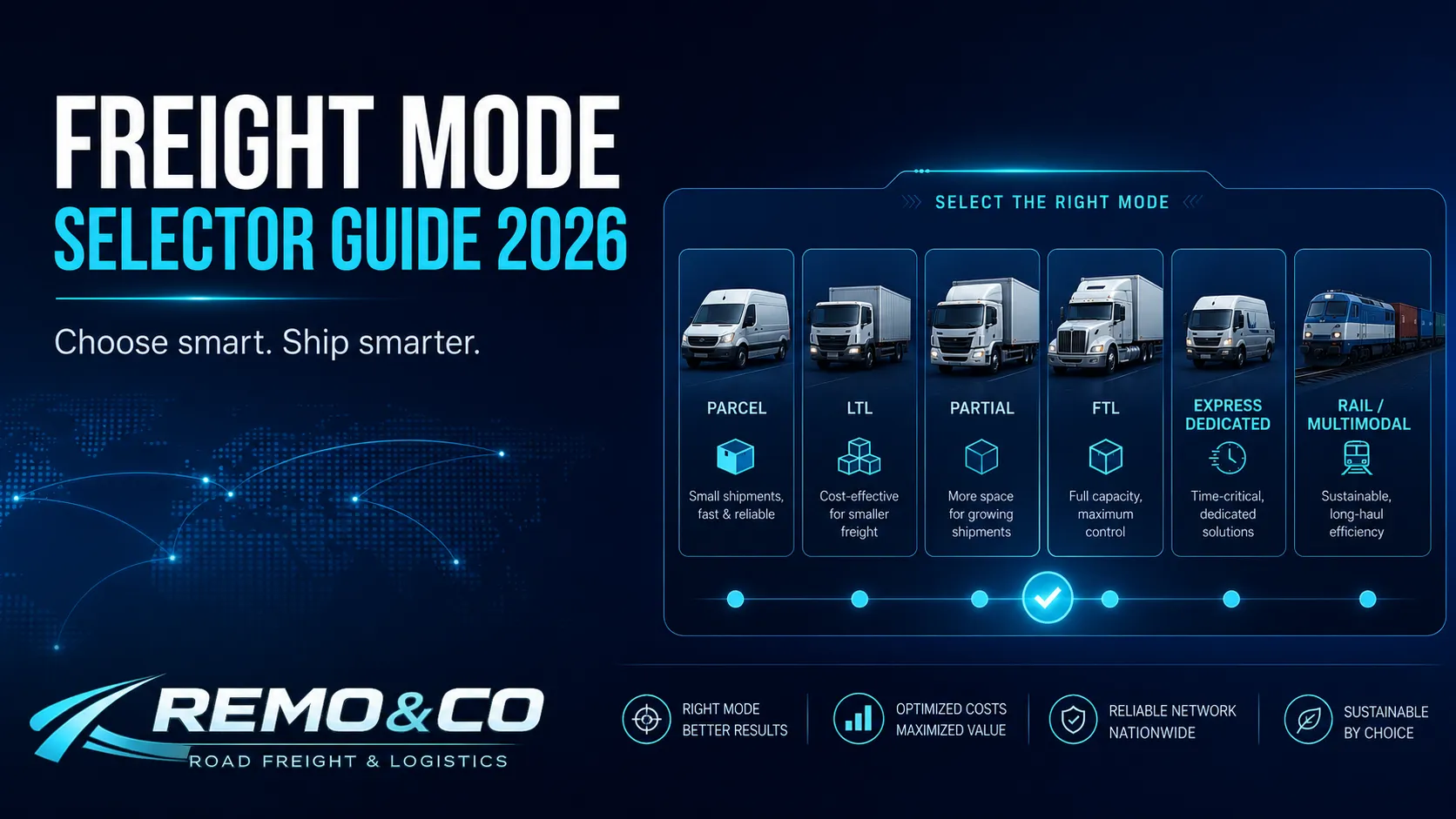 Mode selection
FTL vs LTL vs Express Delivery: Choose the Right Freight Mode
A practical guide to FTL vs LTL vs Express Delivery: Choose the Right Freight Mode, with decision tables, operator checklists, free Remo&Co tools and source-backed notes where compliance matters.
 Documents & proof
France–Great Britain freight: check ELO, GMR and ENS before departure
Prepare a Channel shipment by separating ELO, GMR and ENS, assigning document responsibilities and checking readiness before loading.